Thursday, July 25, 2013

Effects of Spinal Alignment to Spasmodic Dysphonia

My last post ended with me hearing about this healing bed that works mainly by aligning the spine with the use of healing mineral stones.  Having heard that they give free trials, I decided to check it out.

When I arrived at the address stated in the flyer, I almost turned back - because the whole hall was jam-packed with people - mostly senior citizens.  Luckily, there is a separate room for first timers. But even that had a queue, so I had to wait outside for a couple of minutes.  I could hear a seminar/talk being conducted by a nurse regarding the benefits of the machine.

She was holding a doctor's sample skeleton, but it was just the spine.  It looked like this:

Doctor's plastic spine from Google
The nurse bent the "spine" towards the right.  As the spine was leaning, she pointed to the right side of the spine where the vertebrae are stacked together.  She then pointed to invisible nerves and blood vessels that are now pinched on the right side.  "If the spine alignment is wrong, there will be impingement of blood vessels.  And if the blood vessels are pinched, there would be less blood nutrients that can go to that particular organ ... "

By that time, I was imagining nutrients about to go to my vocal cords but are stopped because of vertebral impingement.  Or, I was thinking, perhaps if she's incorrect about the blood flow/blood vessels having a relation to vocal cord function, then nerve impingement could still be there.  So nerve communication could still be hindered.

Later on I found out that the Cervical Spine C3-C7 or the mid to lower neck areas are the ones that have nerves or blood vessels that are connected to the vocal cords.


Anyway to cut the story short, I tried it for about 12 to 15 consecutive days, liked it and bought the machine.  I also had scoliosis and upper back and neck pain so since the immediate effect was that of back pain, I decided to buy one and continue using it.  It was expensive though.  It costs about USD3,000 which is a lot of money here in our country if you convert it to Philippine peso.  But then, that's the way it is, medical relief comes with a price.  But it is worth it, for me.

The name of the machine is Nuga Best.  It's basically a bed with jade rollers.  You lie on it flat on your back and the roller goes up and down the spine massaging the back.
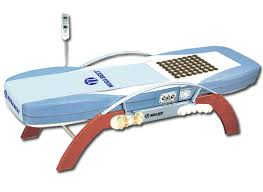

It wasn't hard for me to believe in the good effects of spinal alignment because I have been exposed to chiropractic in my teenage years.  And as for the jade stone rollers, because I know that jade stones have energy-giving properties.  I am half Chinese.  My grandmother made my sister wear a jade bracelet from China and somehow she noticed that she had been healthier when she was wearing it.  She contracted most of her illnesses after her bracelet broke and she didn't have it replaced.  She's back to wearing one.  It might be superstition for some, but I believe there is a scientific mineral composition explanation to it.

Well, I've been using the Nuga Best bed for 2 years now and it still helps my spine.  I'm not sure if it is this or the specialized voice therapy that has helped with my voice.  I did both in conjunction.  But perhaps the combined effect was synergistic.  I was re-training my voice with therapy and Nuga Best was helping solidify the new voice and heal the muscles and ligaments of the vocal cords.

Sunday, April 7, 2013

My Spasmodic Dysphonia and the Provincial Life

No voice = No income.

When I stopped earning, it was too expensive for me to live in Makati City (one of the Philippines' cities with the highest cost of living).  Therefore, I went back to my hometown, Tuguegarao.  


I'd have to admit, I wasn't too happy going back to the province -- the fields, rivers, caves, the cattle.  Yes, it does sound calm and serene, but I was in my mid- to late 20s!  I wanted to live in the city!  I loved my job!  I was getting paid really well and I've just recently been promoted!

Who dares to say that losing your voice is only a minor thing?  Don't we use our voices to order at restaurants, tell the cab driver where we're going, order water delivery, reply to the bank teller?  I know, they told me I can just nod and sign.  But it'll still be pretty awkward.  I tried, but then I get this weird look from the bank teller -- thinking that I'm either a snob or dumb.  I can't exactly blame them, anyhow.  My actions were kind of strange, not speaking.

So... when I arrived in my hometown, I shut myself in at home.  For 3 months.  Going out only for groceries and to go to church.


During that time, I was researching on other ways to get well.  I was looking up Dr. Morton Cooper, following his YouTube videos, learning about Connie Pike, Mike White's breathing techniques, and the rest of the SD treatments I've posted (link: http://voicecuresuk.blogspot.com/2012/09/spasmodic-dysphonia-therapies-reviews.html ).

One day, I saw a flyer about this miracle healing bed that supposedly cures a lot of ailments.  It says that the treatment is mainly about slowly aligning the spine (they use healing stones to do it which should add to the healing, I was told) and therefore releasing pinched nerves and other blockages so that the blood and nutrients would reach those specific organs that ails you -- so I was thinking my vocal cords now.  I also saw there's a free trial for it!

.... Running out of blogging time.  It's a Sunday and we have family lunch!  More about the bed on my next post ... 


Tuesday, March 26, 2013

Losing my Corporate Job Completely

Previously, I mentioned that my company granted me 6 months of sick leave, unpaid of course. I took that time to rest and focus on my voice healing. When the time came for me to go back to work, I still couldn't speak that well, and I feared that getting back into the swing of things would stress my vocal cords too much. My boss was truly generous for she offered me another 6 months of extension.


Fast forward to the end of that 2nd 6 months, I knew and felt in my voice that I cannot go back anymore. At least not when I'm not confident that my voice would stay even under pressure. And I don't want to shortchange my employer by going back, getting a good salary and being just half as effective (my work includes talking 70% of the time). So I had to officially resign.

It was a really depressing season for me. The uncertainty about my health and now the added uncertainty about my career. I was wondering how people with disabilities cope. I was thinking perhaps people who had their disabilities at a young age or since birth were much more likely to be able to adapt. It was especially hard when one has such high expectations of oneself. I used to be so goal-oriented, success-driven. I took failures very badly.


I guess since I have a Type A personality, and I've come face to face with something that makes me feel like it's not within my control -- I get upset!! That's how I felt.

Since then, I've learned to adjust. I'm still a Type A personality, I couldn't change, or... I don't know. Is it possible to change one's basic trait or predisposition? But all I know is that I'm still the same, I am still goal-oriented. I'm still driven to succeed. But there's a change in my thinking. At the way I approach things. I've learned the power of letting go - when needful. I still believe in working hard, but now I work hard outwardly but with internal peace. Striving, but with a happy attitude. And although I now have 65-75% of my voice back, I continue to adopt the "internal peace" demeanor. Somehow, it has helped me more than I thought it would.

Just the other day, I rode on a tricycle. The driver didn't hear me clearly and asked me to repeat myself. I felt frustration building up within me but I remembered to let it go. So I took a deep breath, relaxed my shoulders, and tried again. Thankfully, he understood what I said this time.

Looks like removing internal frustration, and just letting things be ("So what if he didn't understand me? I'll just repeat what I said. Simple as that.") somehow allowed my voice to get out from my throat.

Saturday, December 8, 2012

Voice Exercise - Extoning

I realized there may be others who are not familiar with Extoning. Or how to Extone. It's a term used by voice therapists which means to make a sound while breathing out.


It's like doing the one in the picture but with CLOSED MOUTH while letting the hum or sound go out.

The partner of Extoning would be Intoning. Which is making sound while breathing in. That comes later on in the voice exercise program.

Voice Teacher Alma Vajas would be a good instructor who can teach the basics of Extoning/Intoning and how to do them properly. I didn't learn from Alma, though. I learned from my online mentor who is her student. And the Smolover book also has a CD where you can hear the audio demonstration.

All the best - to all SD patients!

Friday, December 7, 2012

Smolover Voice Technique - for Spasmodic Dysphonia

I've decided to post here the 1st exercise I've done, which was the most effective method I've tried so far. It's from the Smolover Method.

I haven't been able to email back to most of the email queries I've received, sorry!! I'm getting married and moving to a different city exactly a month from now, and I didn't know there needs to be a lot of preparations to be done!

Better if I post my experiences and share here. Kindly just add me here or input your email address under Follow by Email so you'll receive updates :-)

There are some who said they do not wish other people to know that they have spasmodic dysphonia. So I won't include them here. But I also cannot promise to answer your queries if you want me to email you back one by one and privately.

Hi Diane Ryan - It's too bad that the Smolover book became out of stock! But no worries, you can do the exercise I'll be posting below. You can begin with this. It seems like a small thing, but it made a world of difference starting small!

Hi Syed - Alma Vajas already replied to my email! Well, not her but her recommended voice therapist. Her name is Terry. She does Skype sessions at USD90/session. If you're interested, just comment here and let me know.

Hi Cathy Lynn - I'm not sure now if I was able to reply to your 1st email! I think I did, but sometimes it turns out I only replied in my head.. The Chinese herbs I took helped my voice by lessening my acid reflux. I know I've read materials that say acid reflux has no effect on SD. But in my case, I think it has an effect. It's not the main cause, but since I already have existing SD, I could feel my acid triggering my loss of voice. But I think Pariet could give you the same anti-GERD effect.

Hi Peter - I hope the book helps your brother! Wait, which book are you referring to? At any rate, all of the books I bought were helpful: Connie Pike's, Dr. Cooper's and the Smolover book.

Hi Andrea - I bought the Student Version of Sing&See. It was helpful for doing Dr. Cooper's technique, especially at the start where I needed to find out my normal pitch and see if I'm talking within that pitch range. Although as I've progressed, I couldn't take the Sing&See with me anywhere. It'll be funny if I'm talking to a friend and I was attached to my laptop to see if my pitch is correct. ;D Although I did that with a good friend, explaining to her what I'm doing. :-) I'm using a real piano keyboard now with my continuing exercises because I can already detect which key I'm talking in/humming in.

Hi Lynn - I paid Dr. Cooper USD500 for the 30 minutes over-the-phone consultation. Hope you were finally able to get in touch with him!

Hi Ruth - I was thinking that in your case the book I'll be sending you would help only a bit. It discusses the theories and has some exercises, but they're mainly relaxation techniques. But they can only help so far. If ever you'll get a book, I suggest the Smolover book. I'll be transferring to Manila next month. If we have time, we can meet up in our place (if we do get to find a place to live in!!). I'll be bringing my piano-keyboards there, so I can show you how to do the exercises.

If I may have missed your email, my apologies. You can contact me or our other fellow SD patients here. It is good to share experiences and results.


So finally, here is the 1st exercise I did under the Smolover exercise. I did not edit my Pastor-mentor's email anymore:


Dear Misty,

The exercises in the book by Dr. Smolover start out very advanced. For the first one only extone. Sit relaxed in a quiet place. You need a piano keyboard, or I use a computer keyboard. Gently extone, think tiny. It is in the tiny that you will grow little by little. Start out as low as you can and go up to as high as you can. Take a couple minute break and then start up as high as you can and bring it down. Do this two or three times. When you reach as high as you can, try to go two notes higher. It will be hard, and it is work.

What you are doing is stretching the ligament by going up. You are also aligning it in order for it to make sound. This is the first exercise. Do this six days a week and take one day off.

Notes:
1. Don't worry about the quality of the sound as yet, just make pitch. Sound is made from your ligament so if there is sound your ligament is working.

2. In the beginning make sound any way you can. Little by little it will get better.

3. try to stay relaxed when making sound, though this may be hard.

4. The theory is like lifting weights. It takes time to get back in shape and it will take time for the exercises to work, but stay with it.

5. Do not worry about doing something wrong, just work your voice.

Hope this helps.

Friday, September 14, 2012

Dr. Morton Cooper - Stop Committing Voice Suicide book review


This is my 1st book of Dr. Morton Cooper's. Its subtitle is "Common Symptoms of Voice Suicide - Voice Misuse and Abuse." No bookstore in the Philippines sell this so I ended up buying it online. It has 11 chapters covering the ff. topics:

1 - The Shocking Truth about Voices
2 - Medicine in Wonderland
3 - De-Mystify and De-Medicalize
4 - All the Presidents' Voices
5 - Voice Suicide: Whatever Happened to Voices?
6 - Speaking of Kids
7 - Hope for Hopeless Voices
8 - Change your Voice, Save your Life
9 - The Madness of Medicine
10 - What You May Not Know about Voice and Speech
11 - How to Get a Voice that Really Talks for You


Dr. Cooper previously had I guess mild spasmodic dysphonia and he treated himself.

In this book, Dr. Cooper addresses the common things we do with our voices that he says damages the vocal cords. One of them is having the wrong pitch, especially having it too down in the throat. There might be some truth to it -- because about half a year before my voice went downhill, I had been subconsciously (alright, maybe not too subconsciously) imitating the voice of my colleague. She's one of my seniors. Very pretty, really smart... and she just had this authoritative, deep voice. So, perhaps ther might be some truth to Dr. Cooper's theory, at least in my case.

Another thing Dr. Cooper mentions in this book is that GERD or acid reflux has nothing to do with spasmodic dysphonia, and he gave examples of why he believes this to be so. He also gives steps on how to find out your correct pitch. He gives natural spasmodic dysphonia exercises and also spasmodic dysphonia breathing exercises. He also teaches about facial resonance, so that voice amplification is done, helping the little sound coming from the vocal cords.

Dr. Cooper doesn't agree to having botox for spasmodic dysphonia. I think it's very brave of him to be vocal about his stand.

Overall, this is a good book to read when you have spasmodic dysphonia or any kind of voice problem and you're looking for alternative SD treatments.

Monday, September 10, 2012

Spasmodic Dysphonia Therapies Reviews

I have not been posting for a while, been busy with my shop..


But I've been receiving emails asking me about my experiences with different treatments and therapists. So I felt it better to post about my experiences regarding the usual queries.

"Hi Misty! Who is your recommended voice therapist?"

"What's in the Chinese herbs?"

"Where did you have your botox? Did it work?"


About the CHINESE HERBS = I don't know what's in them. Looks like twigs and barks. I would recommend them if you have GERD or if you feel that your spasmodic dysphonia is triggered by acid reflux. But I've found out that they have the same effect on me as the medicine Paiet. So perhaps you could take that instead.


About my BOTOX = I had it mine done by the leading ENT doctor in the Philippines. He has a clinic at St. Luke's Medical Hospital in Manila. I was told he is the expert in botox treatments for the vocal cords because he has done most of the botox injections for spasmodic dysphonia patients in the Philippines. Did it work? Unfortunately, not for me.. I truly envy those who are receptive to botox treatment! They at least got some faster relief.

About REGULAR VOICE THERAPY = I've had about 2 to 3 months of regular voice therapy. And I would agree with those who say that traditional speech or voice therapy DOES NOT WORK on spasmodic dysphonia. At least not in my SD. It works well on vocal cord paralysis, etc. But somehow I have yet to hear or an SD patient who responded well to regular voice therapy.

Now for the expert voice therapists concentrating on spasmodic dysphonia... If you have SD, I'm sure you've come across these names in the industry:


About DR. MORTON COOPER = His main theory is that spasmodic dysphonia is caused by using the wrong pitch (too low or too high from your normal, natural voice). He has lots of testimonies of cures. yes, cures! You can find his videos in his YouTube page. I did 30 minutes of overseas phone therapy with him. He confirmed that I am doing thee right exercises. I got the exercises from his books. I bought 2 or 3 of his voice books. His professional fee is expensive, but if you have the money and you live in the United States, he guarantees a cure if you stay in his clinic for 8 hours a day for 4-6 weeks. I didn't go and opted for the phone therapy because I live in the Philippines and didn't have enough money for the full treatment.


About CONNIE PIKE = I had about 3 Skype therapy sessions with her. She was the first therapist who opened my eyes and gave me hope that even if botox didn't work for me, I can still try to do spasmodic dysphonia voice therapy. Breathing exercises and using the kazoo (pls refer to my previous blog posts). She's a good place to start off with if you want to look at natural ways of treating SD. Her professional fee is more affordable than Dr. Cooper's, although personally I believe Dr. Cooper's treatment is more targeted and effective. Connie's treatment involves more methods such as relaxation therapy and posture. But she is very nice and sweet and if you're in that depressed stage, she would be perfect to contact.


About ROGER LOVE = Nice book and CD to have just to help you break the usual monotone SD patients often develop. Helps you explore and feel comfortable about exploring your voice. I got this book and CD from Connie Pike.


About GARY CATONA = I have no experience with his methods because he replied to my email saying he doesn't treat ABductor SD. He does have a before & after voice recording of a patient he treated with ADductor SD. You can check his website for it.

About ALMA VAJAS = I'm doing her therapy now. For the past 10 months (since Nov. 25, 2011), I've been doing her therapy which is based on the Smolover method. The main thought of this therapy is to strengthen the vocal ligament; hence, controlling the spasms. At first, I didn't want to even try this because I felt it goes against Dr. Cooper's theory of putting the voice up in the "mask" but then I've gotten in touch with other SD patients who did this kind of treatment and it worked for them, so I gave it a try.

Actually, the method was initially designed for opera singers. But there were reports of the technique helping, even treating, SD. So Alma Vajas tweaked it and made it more effective for SD.

I can say for my case, her voice therapy is the most effective and doable. Effective - because I'm about 80% healed. I've gone out on an outing yesterday with a group of friends. And I was able to talk normally. I used to be unable to talk within a group setting. Doable - because it takes 1 hour a day, 6 days a week.

The funny thing about my treatment with Alma Vajas is that I have actually never (not even once) had a therapy with her. I've learned the therapy from two of her patients, a certain Pastor Jim Townsley (who had ADSd) and a Pastor from the US (who had ABSd). So it was more like I had Alma Vajas' therapy - INDIRECTLY. I did try to get in touch with her since August of last year (2011). But it seems she couldn't do therapy long-distance or she's busy. She's in the U.S. I called her and spoke with her daughter about 4x in a span of 2 months. Not counting the emails I sent. And she kept saying they'll get in touch with me once they are able to do Skype therapy. I waited for 3 months but no message came. In my embarrassment to call again (I don't want to be a pest), I resorted to looking for her patients to get their advice and feedback. That's when i got her therapy through the two pastors.

I actually felt slighted and ignored by Alma Vajas! So this is so not an advertisement for her character. But then, I can honestly say her method works. I love love love the Pastor from the US who has been my mentor and friend.

NOTE: Pls don't email him or bother him, he's very busy. I've only mentioned his name here because I want to thank and honor him. If you have queries, pls email me instead. I'll answer what I know.

Just an additional note: Amazingly, 2 days ago, I have received an email from a colleague of Alma Vajas saying that the Skype therapy is already in place and she's asking if I still want to have therapy. It's been 11 months now since I last heard from them! And I'm doing well in my therapy with the Pastor from the US... I'm not sure if I still need to have Alma Vajas' direct therapy! But perhaps I can just try... We'll see..

Wednesday, November 9, 2011

Chinese Herbs for Spasmodic Dysphonia

My cousin recommended a good Chinese doctor and I went to his clinic for a general checkup. He gave me some Chinese herbs to boil and told me to drink the concoction. I saw the assistants make the herbal preparation. They were different barks, leaves and other tree parts. Each ingredient had a different measurement.
It tasted like tea, very bitter tea. But it wasn't that bad. Or perhaps since I'm used to chinese medicine (my grandmother used to let me drink deer's horn extract and other chinese medications), this tea tasted alright. A closer look would show the barks and leaves:
After 3 days of drinking the concoction, my voice sounds louder and it's not as hard to control anymore! I don't know what these herbs are, but they sure do help :-)

Saturday, October 29, 2011

Putting the Voice Up in the Face

I would like to thank Valerie (my drill sergeant!) again for allowing me to post our email conversations in my blog.


Hi Misty,

It's okay if you feel it more in the mouth area than the nose. The main thing is to keep it away from the lower throat and bring it up and forward into the face. Dr. Cooper says, "the lower throat is no man's land." Keep at it. The whole rest of the week I "practiced on the numbers." Do it for as long as you need to. It's kind of hard doing it on your own and not having direction from Dr. Cooper or Connie right there with us. The more you do it, the easier it will be and then it'll click.

People spend the most time in the stage. Even after I left Dr. Cooper's office the hum and numbers was the exercise I did most often. After this stage, you move to humming with one syllable words like: cat, dog, rat, home, groan, ball, bat, boy, girl, etc.

Valerie

Friday, October 28, 2011

Voice Exercise for Spasmodic Dysphonia

On Tue, Jul 12, 2011 at 6:01 PM, Maria Shellyn Chua wrote:

Hi Valerie,

Ah, yes! I can feel the buzz on my mouth (more on the upper lip) and the bridge of my nose and the sides! Placing my finger on the side of my nose works! But right now, I can touch more vibration on my upper mouth, just a little on the side of my nose.

Today is my 4th day of practice. I'm not sure if I can say it's an intensive. But it is intensive to me :-)

I'll continue to "practice on the numbers" I think I'll be able to feel if I can move forward already. But meantime, I think sustaining the Hum with Numbers is harder than the simple Hum. I have a feeling I'll have to do this exercise in a longer period of time. How long did you have to do the Practice on the Numbers?

Blessings,
Misty


--- On Wed, 7/13/11, Valerie Gabriel wrote:


Hi Misty,

Do you feel the buzz near your mouth area, or just the back part of your nose? When I hum, I usually feel it on the bridge and side of my nose and a little around the front of my mouth. Maybe you're not using enough "pressurization" to get the buzz? Don't know if that's it, but it's a thought.

It's all one step at a time. In daily conversation, you can try to keep your pitch up. That's why he recommends 3-4 weeks of intensive therapy because by the time you leave you are able to speak with no SD symptoms. As Dr. Cooper says, "you practice on the numbers". So, if you want you can move to humming with numbers and make sure you say them as a question. "Um-hmm one?" "Um-hmm two?" This really does help. Also, another tip to feel the resonance is to place one finger on the side of your nose. Make sure you feel a constant vibration.

Let me know if that helps.
Valerie


On Mon, Jul 11, 2011 at 11:24 PM, Maria Shellyn Chua wrote:


Hi Valerie,

When I hum now I can feel the buzz on my nose. But it's at the back part of my nose. The part where you'll feel your mucous when you have colds. There's no buzz on the tip of my nose. Should it be at the tip of the nose?

I'm wondering how to move from the voice I have for humming (which is now quite good) to using that same voice in speaking daily conversations!

After I do the humming correctly and master it, the next step is to Hum with Numbers is that correct?

Blessings,
Misty

Thursday, October 27, 2011

Inclined Bed for Spasmodic Dysphonia (Acid Reflux)

I was advised by my doctor (who suggested acid reflux as the cause of spasmodic dysphonia) to sleep in an inclined bed. So I had a custom-made inclined bed made with the following specifications:

Width - 36 inches
Length - 75 inches
Height - 4 inches (lowered), and 12 inches (extended)
Leg - 14 inches but slanted backwards and locks when extended so it's not higher than 12 inches


I had been sleeping on this bed on and off for the past 4 months and I have not seen a miraculous voice return. But I still use it just in case any acid reflux is aggravating my SD, the slant/inclined position of the bed will keep the acid from getting to my vocal cords while sleeping.

Thursday, October 20, 2011

Pitch and Humming


--- On Sat, 7/9/11, Valerie Gabriel wrote:

Hi Misty,

Good job! Keep it up. I'm waiting for a fancy microphone I bought to use during practice. It's a handheld mic to remind of being back in Dr. Cooper's office. I hope See & Sing works like the voice mirror. Okay, I have an idea why you're not feeling much of a sensation when you're humming. I listened to your recording and it sounds like you have to go up higher on the second part of the "um-hmm." From what I was hearing, it sounds like you kept the same pitch throughout. This won't help with resonance and you'll just feel it more in your mouth area. If you make more of an concerted effort to go higher, it'll put your voice more in the face.
Sometimes, I use my hand to remind me to go up. For example, the "um" part my hand is at my mouth and then on the "hmm" part it jumps up to my eyes. So, it's a higher intonation like a question.

Good job keeping your hand on your tummy. It'll help keep you on track with your breathing and not tense up when you're humming. This will also come in handy when you transfer to numbers because your stomach will be able to go in even more with the breath out on the numbers.

Talk to you soon!
Valerie


On Fri, Jul 8, 2011 at 9:44 PM, Maria Shellyn Chua wrote:

Hi Valerie,

Here's a 30 second recording of my Humming voice. Recorded after 2 hours of practice today. I understand what you mean when you'll feel the buzz on the nose and mouth. It is taking me a while to feel it. I need to hum a few times (ok, a lot of times) before I can move the buzz from the lower throat to the nose. Even now, I can hardly feel the buzz in the mask. But at least there is some sensation there now.

I had my healing massage bed treatment so I stopped practice first. I have a patient on the bed now. I'll continue the humming this afternoon to complete the 5 hours. I know I sound like I'm too focused on the schedule, but then if I don't do it this way, I might end up not doing it at all! :-)

I'm also being careful not to use volume. I should use pitch, like what you said. Coz I'm like you, I tend to hum using force and volume, like I'm forcing it from my stomach and at the first time I was humming my tummy tightens when I hum because i'm forcing it out. So now, I sometimes put my hand on my tummy while humming to give myself feedback.

Blessings,
Misty


--- On Sat, 7/9/11, Valerie Gabriel wrote:

Of course, I can be your drill sergeant, Misty!

First things first, when you do you "um-hmm" do you do them quick and end with an up intonation as if you posing a question or answering excitedly to a question? Sometimes I pretend someone asked me something that I was really excited to say "um-humm" to and that helps. I even nod my head in agreement. HAHAHA The fine line is you have to make sure you don't "force" or "push" it. Dr. Cooper always says...."don't use volume, use pitch." You should feel it primarily in the nose and a little in the mouth area. It's better to be higher in pitch just so you bring it out of the lower throat. Part of my problem is I come from a loud Italian family and I'm small in stature so in order to be heard, you have to be loud. So, when I talk the way I'm supposed to in the "mask" it feels very soft, gentle...not how I'm used to speaking. So, sometimes I "push," to be a little louder instead of using pitch and going higher and that's part of my habit I need to break. This is known as a vocal myth that I've habituated as part of my vocal identity.

By the way, all of Dr. Cooper's techniques work for me too. It's because they're simple are target the root of the problem...talking in the lower throat. As much as I like and respect Connie and will probably attend her clinic, I agree more with Dr. Cooper and his take on the condition than hers. Maybe it's because I've been exposed to him longer and just recently found out about Connie. Some of her techniques may work for other people, but if the focus is coming from the lower throat it isn't going to help. Like the side to side and counting thing or the kazoo. It will help with breathing, but if you're speaking from the lower throat it won't help your voice. Or the lip drills and tongue drills. Same thing, if the voice is coming from the lower throat how does that help? So, with Dr. Cooper, the "um-hmm" goes to the heart of the problem and lifts the voice out of the lower throat bringing it to the face "where all good and great voices come from" and then you work on vocal image. And, not to sound like a broken record, then you have to change the voice image/identity to create the permanent change.

As you know it takes tons of practice...what I forgot to mention is that after the 5 hours in Dr. Cooper's office I would go home and practice another couple of hours. Then, when I woke up I practiced on the drive to his office, at his office, a little on the drive home because I was tired and at home. Seriously, it's a lot of practice and sometimes it can be a lot for someone to do, but all this practice is just until you get a handle on how your voice should work. This is where I got off track. I got lazy and didn't practice as often as I should've. Dr. Cooper always jokes "it's a 25 hour a day job!"

Also, honestly, about the videos. Don't waste your money or worry about them too much. One of the DVD he gave me is just former patients talking about his treatment and before and afters. You can get just as much information watching his YouTube videos. He tells you all his techniques there.

I just have one roommate. She's a firefighter and she's gone 2-3 days in a row sometimes. So when she is I take advantage of that time. It's hard sometimes when she is home because she wants to do stuff or hang out and that takes away from my practicing. So, I have to be more selfish and concerned about my recovery.

Okay, so if you were to start your practicing this weekend -- this entire weekend just focus on the "um-hmm" no numbers. This way you get used to the feel. Remember what I mentioned at the beginning of the email. It has to be quick with an upward intonation and you should feel it in your nose, mouth area. Some people also feel it in their cheeks and some can even feel their teeth rattle. You also have to use the right amount of pressurization. What I mean by that is don't do it too quietly because you need to get the resonance. Also, don't do it too loudly that you force or push the voice...look for that sweet spot. I hope I'm not confusing you. Then, try to carry over this higher pitch when you're talking in conversation...don't be too hard on yourself if you can't. Just go back to the "um-hmms." I only hum "happy birthday" in the mornings when I'm establishing my pitch and then at night.

Hope that helps!
Good luck! Let me know how it goes or if you have any questions.
Valerie


On Thu, Jul 7, 2011 at 7:06 PM, Maria Shellyn Chua wrote:

Hi Valerie,

Thanks much for answering all my queries! haha. I guess I sounded like a kid being in the zoo for the 1st time. Lots of questions! ;p

I haven't gotten in touch with Connie lately. Yes, she's very nice and supportive. And she had SD also before. So she can totally relate. She has lots of testimonies from patients as well. I haven't gotten back to her yet because I'm still doing the exercises myself. And like she said, I also need to practice on my own. It's the bulk of it. Also, just in my specific case, I've tried both the diff techniques of Dr. Cooper and Connie. And some of Connie's techniques worked for me, but almost all of Dr. Cooper's worked. So I'm leaning towards Dr. Cooper's techniques. It's really so sad that he's not doing well medically right now. I'm praying for his healing.

Yes, you can attend Connie's clinic. You can incorporate it with Dr. Cooper's techniques you learned. Get the best of both, the ones that work specifically for you. Connie's is more wholistic and more modern. Dr. Cooper is more targeted and old school (in my perception). haha. But I don't care coz his techniques work for me! :-) The only problem I'm encountering about his being old school is I can't get his videos because they don't accept paypal or money transfers! Only cash and check, I think. Sigh.

Oh, you have roommates now. Right, I had 2 before. And yes, it can get embarrassing to practice. I also find it uncomfortable practising with other people around. Sometimes I do it if it cannot be helped. Let's figure out a way to work around it! :-) How many roommates do you have? Do you all have the same time shifts? What times are they usually not home (like they're at work or in school)? Would you like me to help you figure out a schedule and stick to it?

Oh, that's great! You have a drill sergeant! hehehe. It's good to be accountable to someone.

In the meantime that Dr. Cooper is not available for consultation, I'll follow the schedule you gave. Would it be alright to ask for your help in making me keep it? :-) I'm practising now 2 hours a day, but i'm not that sure if I'm doing it correctly. I think I'm doing it too fast. Like I read paragraphs with the Sing&See. Perhaps I should do it the way you did it in Dr. Cooper's clinic. You were there for 1.5 weeks:

First 3 days, Voice Mirror right? Ok, i'll do that with the Sing&See. What did you do in the first 3 days, hum only? or hum with numbers? Or the correct way is to just simply hum (no numbers, no words)? Do happy bday hum?

Blessings,
Misty


--- On Fri, 7/8/11, Valerie Gabriel wrote:

Hi Misty,

Great questions...it's good to be thinking about all that you are.

Practicing until you get it is the most important. It took one of Dr. Cooper's patients six months of practicing 8 hours a day until he got it. Granted, he and a paralyzed vocal cord, but the point is still the same. Bryan reminds me to never give up and to stick with it, until you get it and it will pay off. I don't practice with Bryan. He just checks in one me every few weeks to see how I'm doing and to keep me accountable. As someone who's been through this and has been successful, he's a great mentor. I call him my drill sergeant because he doesn't mince words and tells you like it is.

Carry over is hard for me too sometimes and it goes back to your voice image and practicing. You have a persona/identity of how you want to been seen and how you "think" you should sound. When you change this, it feels as though your personality has changed even though it hasn't--that's why carry over can sometimes be hard. When you're alone it doesn't matter what you sound like and you put less pressure on yourself to sound perfect.

Setting time aside is great! I need to do that too. It's hard with roommates though, huh? I sometimes get embarrassed if people hear me humming or talking to myself, but that's my own issue. Yes, if you can help it, don't rest your voice. Hum "happy birthday" or "um-hmm" at least. I understand what you're thinking, but it's counter-productive. If you rest your voice, your brain won't remember all the practicing and work you've done and when you go to speak will revert to what's familiar because it's forgotten what you were practicing. Does that make sense? Remember, this has to become 2nd nature and the only way to do that is to do it constantly. I've seriously become a humming fool! Hum or "um-hmm" like you said mid-sentence or before you speak just to get tone focus is what you're supposed to do to remind yourself. Sometimes it helps to just hum what you want to say, then say it. This will help you to breathe when you're suppose to breathe and to get the tone focus.

You do have to be your own psychotherapist. It's hard not do become withdrawn, depressed, sad, but you have to stay focused and PRAY! I've struggled with all that....if I slip into depression mode, I pray for strength and grace to stay focused and do what I have to do.

I completely understand not talking to others that don't have SD. They don't get it. People say..."why don't you just breathe" or "why don't you just talk higher" it's so much more than that because of the mind games. Dr. Cooper says it's 1/2 technique and 1/2 mind games.

HAHAA Dr. Cooper's schedule was long with lots of practicing, but that's what makes it intensive and this is what you have to continue with when you leave. It was a 5 hour day in his office. You didn't work too much with him. Maybe an hour or so total the whole day. He loved questions, so you could ask him anything you want. He's great. He would always tell me "your prognosis is excellent, but you have to do what I say" or "I want you to be successful!" He checks on you throughout, but most of the work was on your own or talking with a partner. The first 2 or 3 days all I did was "Um-hmm" in the Voice Mirror. Again, this was to get the tone focus/placement. Then, you transition to "Um-hmm" and numbers. My last day there he moved me to another room to practice sentences. I'm sure I would've done more, but I was just there a week 1/2. Remember, I was supposed to stay 3. He has you do group work which is great because you can talk to other patients. Everyone thinks they sound like Minnie Mouse or sing-songy or loud and then we all tell each other that they don't sound like and you realize it's just in your head. It's really great because you need that feedback. He also had you do "pressure sits", where he puts you in an uncomfortable situation to see how you handle it. Mine was talking on the phone, so he called Bryan and I talked to him for five minutes. He said I did good and sounded great, but he still heard a little squeezing in my lower throat, which is caused from nerves/pressure and I felt it because my throat was a little tight. Again Dr. Cooper has a gifted ear and can pick up even the slightest "off" to your voice and knows exactly what you're doing wrong and how to fix it. The reason why he suggests most people stay with him 3-4 weeks is because it takes that long to develop a new habit. Then, you just monitor yourself until it becomes 2nd nature.

Quick question for you? I was thinking about attending Connie Pike's clinic. I know you had a consultation with her, have you spoken to her again? I've been emailing her. She's super sweet.

Talk to you soon!
Valerie

On Wed, Jul 6, 2011 at 10:08 PM, Maria Shellyn Chua wrote:


Hi Valerie,

The humm puts my voice up in the face. Sometimes if I just humm without giving much thought to it, I can still feel the voice in my lower throat. So I guess until it becomes 2nd nature like your friend said, I'll have to be mindfully practising.

I have noticed that I also have voice when I laugh. I actually try to be more funny now, or at least laugh even though I don't feel like it. haha. I know it sounds fake, but better to fake it till you make it! ;p

But of course, we cant laugh all the time. :-) So we'll still have to practice having a natural conversational voice.

Placement/ tone focus is my biggest challenge right now.

The voice image needs to be shattered! I'm being my own psychotherapist now, lots of prayer, etc. to overcome it.

I can't seem to carry over my practices to everyday life. I was able to do it though last end of May (the 2nd recording you heard) but it only lasted for a week. Now it's not that well again coz I slacked off my practice session. So now what I'm doing is I've arranged my schedule so that I can have a room to myself from 9am to 11am to focus solely on my voice - doing Humms, trying to read a few uplifting lines (with Sing & See), watching Dr. Cooper's Youtube vids, reading his books.

I have to really set aside time or else I'll slack off, and won't be able to talk! Plus now I'm also using a whiteboard to communicate. I know Dr. Cooper says we don't need voice rest, but it's not voice rest that I'm doing. It's more of stopping myself from going back in the old voice habit. Until I get this right by myself, I don't plan on talking to other people who don't understand SD. A bit extreme? hehehe. I do talk with my boyfriend sometimes and a family friend. I've explained SD to them so they allow me to stop mid-sentence to hum and get my correct pitch before talking again.

How about you? How are you coping? Do you practice with your friend?

How was your schedule with Dr. Cooper the last time you were there? How many hours a day did you have to practice with the Voice Mirror? Was it by yourself? With Dr. Cooper? With a practice partner?

Blessings,
Misty


--- On Thu, 7/7/11, Valerie Gabriel wrote:

Hahaha Misty, the voice mirror was my best friend! Honestly, after hours (yes, hours) practicing on that you really get the feel of where your voice should be. What software did you buy? Is it See & Sing? I was looking into that. Is it helping you? I looked everywhere for the Voice Mirror, but the company that made it in the early 80's went out of business. The reason why Dr. Cooper is so good at finding your pitch is because he's a musician. He has a gifted ear. He knew as soon as I began to speak that I was talking at EFG above middle C and need to go a tone 1/2 higher to ABC above middle C. When you practice you're "Um-hmm," do you feel your voice jump to the front of your face? If you go, "Um-hmm" and hold the end 'hmm" for about 3 seconds talk off that and will help you place it. Or, what works for me is talking off my laugh. A Dr. Cooperism "your laugh is your voice" so if you laugh and talk off that, it will help you with placement too.

I keep in touch with a friend that I met through Dr. Cooper. His name is XX and he went to see Dr. Cooper in 2000, stayed with him 3 weeks and if you ask him he will tell you he's cured. He doesn't think about the way he talks anymore and he has a perfectly normal voice. He keeps in touch with Dr. Cooper and speaks with him at least once a month. He tells me had I stayed the entire 3 weeks it would have "solidified" my new voice I would've just needed to self monitor. At that time, I really didn't understand what I was up against and couldn't afford it, but at least I have the foundation. Dr. Cooper says "you have to use the new voice so you become familiar with you. You won't use something you don't feel comfortable with."

The voice image is roughest. Intellectually, you know what you have to do to be better, but your psyche won't let you do it. It tells you to "talk in your old voice" or "talk how you feel comfortable talking." It's very powerful.

The main thing is that you get the proper resonance. Pitch is a prop to get you to talk forward in the "mask" or in the face.

I do practice everyday, but I don't practice as long as I should because life does get in the way or I get lazy because it can get tiring, right? After Bryan got home from Dr. Cooper's he would practice for 2-3 hours a night for the next couple of months. Then, he noticed he was practicing less and less until it became 2nd nature. I don't have any voice recordings that I can upload. I look though. The only voice recordings are from when I worked with Dr. C and one when I was moving out of my apartment back in January--that's on my phone.

How often do you practice? Do you notice a difference? Are you able to carry over your practicing into everyday life?
Valerie

On Tue, Jul 5, 2011 at 7:02 PM, Maria Shellyn Chua wrote:

Hi Valerie,

Are you using any kind of pitch indicator? Like the Voice Mirror Dr. Cooper uses on his videos? I saw a software that acts like it and I bought it. :-)

I've attached a recording of my voice May 04, 2011 and May 30, 2011. Before and after doing Dr. Cooper's exercises.

Yes, the voice image could be hard to shake off. But I'm really trying. You're so correct! I do feel like I have a little girl's voice with a higher pitch! ;p But then, at this point, I'm willing to try anything.

How long do you practice? Do you practice every day? Do you have voice recordings? :-)

Blessings,
Misty

Wednesday, October 19, 2011

More SD Reviews (Botox, Mike White and Dr. Morton Cooper) - coming from 2 SDPx

--- On Thu, 7/7/11, Valerie Gabriel wrote:
Hi Misty,

I listened to your voice downloads. For doing this all on your own, I think you're doing good. Just keep up the practicing and be patient with yourself. For AB/SD you need to up talk the words more to close the vocal folds...so on words that give you trouble maybe go a 1/2 a note higher, but be sure to keep the resonance. Pretend like your talking into your nose.

I actually just got Mike White's breathing kit to see if that'll help. I always go back to what Dr. Cooper and others say. You're breathing is symptomatic of not talking in the face. Once you get the resonance, and you put your voice in the face your breathing will open up and you just need to monitor it. This is true. This is why breath support is the last variable Dr. Cooper teaches because if you get the breath support before master the pitch and tone focus you're going to strangle yourself even more because you're "forcing" the words with proper breath support, but not proper tone focus--it's be too deep throat. I struggle with the same breathing difficulties you do. I can practice breathing until I'm blue in the face and then when I talk it reverts to holding my breath...it's all about the pitch/tone focus.

My buzz words are the Umm-hmm too. Yes, right, hello, really..those don't work to well for me either. I don't have any of Dr. Cooper's self-help videos. I think if you watch his You Tube videos they would be something similar to that. When you practice your Umm-hmm, do you feel the buzz in the nose and mouth area. If you do, that's a great sign. Just look for that same buzz when you talk.

I don't have Skype. I have Tokbox, but I will look into setting up a Skype account.
Talk to you soon!
Valerie


On Tue, Jul 5, 2011 at 6:49 PM, Maria Shellyn Chua wrote:

Hi Valerie,

Thanks for letting me know of Dr. Cooper's current condition. So that's why he's been so hard to reach! I was thinking that he was shunning me off. I've been emailing a lot and calling his office. I was able to speak and email with Lorna, it turns out she's his daughter.

I have bought Stop Committing Voice Suicide about 2 months ago. I'm doing the breathing exercise he taught there. Mike White's breathing exercises are more complicated. And I've noticed that my breathing did improve, but NOT while speaking. My observation is that I need to practice my breathing WHILE speaking. Because I already breathe normally when not speaking. Something just clicks and my breathing turns haywire when I start talking.

So to sum it up, the breathing technique of Dr. Cooper is the most effective in helping my voice.

I don't have enough saved to go to the US for treatment, the treatment plus the fare board and lodging would be a bit too much. Perhaps I could settle for phone consultation, which is already expensive for me, USD 1,000 for an hour with Dr. Cooper. But what I need is to find out my best pitch so that I can work on from there.

I have been doing the Hhhm One, Hhhm Two. The others like the Yes-One, Yes-Two and the Right-One, Right-Two dont work that well for my case. I've seen that Dr. Cooper finds out what the buzz words are for each individual. The Hmm One, Hmm Two works the most for me. Also, humming the Happy Birthday :-)

The book I ordered Change Your Voice Change Your Life has just arrived from the mail yesterday! I'll be reading it. I've been trying to ask Dr. Cooper's office how I can order his Self-Help Videos, there's still no reply.

I was wondering if you have his Self-Help Videos? Like a step by step demo or Dr. Cooper guiding you to do the humms for 1 to 2 hours. It's a bit hard to focus and concentrate doing it by myself.

Do you still do the exercises? Do you have Skype? :-)

Blessings,
Misty

--- On Wed, 7/6/11, Valerie Gabriel wrote:

From: Valerie Gabriel
Subject: Re: SD Outreach
To: "Maria Shellyn Chua"
Date: Wednesday, July 6, 2011, 1:19 AM


Hi Misty,

Yes, Dr. Cooper is in the process of relocating to Henderson, KY. Earlier this year he has had some health issues and wanted to be closer to his family, which prompted the move. I know he's adjusting to the different pace of life Kentucky is offering as opposed to Los Angeles. I'm planning to work with him again and his daughter told me to wait until the fall too. I was set to fly to KY next week to work with him for 3 weeks, but they cancelled my appointment because he had a set-back medically and is trying to get back into the swing of things. I pray he recovers well and soon.

I live in Los Angeles, CA. I've had SD for about close to 3 years now. Within 5 months of the onset I went to work with Dr. Cooper for a week. He told me I should stay 3 weeks, but at that time I could only afford 1. I'm sure if I would've stayed the entire time he recommend, I'd be "cured". Dr. Cooper doesn't guarantee cures, he just reports them.

I've never tried botox, nor while I ever. They don't know the long-term side affects on the body and I would rather rehabilitate my voice naturally. Plus, botox doesn't help the problem, only the symptoms. Many things that I will share with you about what I've learned of SD is from my working with Dr. Cooper, who also is an ex-SDer. It took him 10 years to recover from SD! But he had to learn on his own, no one guided him. He just didn't accept what he was being told and carved his own path. After my work with him the first time, my voice was really good--like it used to be. Dr. Cooper always says, what you have to change is the voice image. Once you do that you're recovery is inevitable and permanent. That's what I struggle with the most, which is why I've had set backs...vocal image/identity and certain vocal myths I have. I feel I need to sound a certain way or use my voice a certain way that hurts my voice--this is what has to change. He gave me a better pitch, not different from my old voice...only one note higher, but to me I feel like Minnie Mouse. It's crazy. Everyone tells me I sound great, but I think I sound like I'm 12 years old, and I fight this even though I know I shouldn't. This is the vocal image. My friends that I've meet through Dr Cooper would tell you they're "cured."

Have you tried any of the techniques Dr. Cooper shows in his videos? That's the basis of his treatment...and then tons of vocal psychotherapy, which is what gives you the long lasting change...and practice...tons and tons of practice.

I know you're in the Philippines, do you plan on taking a trip here? How are your breathing exercises helping you?

I don't have a URL just yet, as I was looking into it.

If you have any other questions, let me know.
Take care,
Valerie

Tuesday, October 18, 2011

Being in Touch with Another SD Patient (Valerie Gabriel)


On Mon, Jul 4, 2011 at 12:36 AM


Hi Valerie,

It's nice to hear from a fellow SDer! Yes, I'll be happy to stay in touch. I've tried to get in touch with Dr. Cooper for a phone consultation but he's in the process of moving his assistant said. Hence, he cannot do it now. I don't know what they mean by "trying again at a later time" but I will certainly try again perhaps end of this month.

Where do you live? How long have you had SD? Have you tried botox or other means? Can I have your blog's URL?

Blessings,
Misty

Being in Touch with Another SD Patient (Valerie Gabriel)

I've been receiving emails from other SDers inquiring more about my experiences, exercises, tips, etc. I believe it would be best for me to share on my blog a series of emails with another SDer, Valerie Gabriel. We have been sharing exercises, doctors, breathing tips, what works - what doesn't, even about our reasearches and observations on wasabi and apple cider vinegar.

With her permission, I am posting our email conversations on my blog. That is also her picture below.


Date: Friday, July 1, 2011, 3:17 AM

Hi Misty,

I just wanted to reach out to you as another fellow SD'er. A friend of mine
suggested I started a blog and that's when I stumbled across yours. You're doing great on it by the way! My name is Valerie and I'm battling to overcome SD (adductor) too. I also noticed that you're a subscriber of Dr. Morton Cooper on youtube. I am too. I had the pleasure of working with Dr. Cooper a couple of years ago for a week. I was doing really well, but a stressful few months have caused me to revert to some of my old habits...like holding my breath when I talk. As another friend who is cured of SD from working with Dr. Cooper....always reminds me it's a "forced changed of vocal image" and until you can over come the voice image, you can never be fully cured. So, I don't subscribe to the idea that it's a neurological dystonia...I know too many people have are cured of SD and I myself am working towards that too...I've just had a minor set back.

I was wondering if you would like to keep in touch we and support one another. We can share stories, ideas, tips etc.
Look forward to hearing from you,
Valerie

Monday, October 17, 2011

My ABSd Voice - Before and After recordings May 2011

It's been a while since I last posted. I sometimes get lazy to document here having a slow internet connection plus I lack knowledge on how to post a voice recording on blogger... Thanks to Christyleh who taught me how!

I did a recording of my voice May 4, 2011 before I started doing the exercises I saw on YouTube (of Dr. Morton Cooper) and another voice recording by end of May 2011.

Here's the BEFORE recording (May 4, 2011):


Here's the AFTER recording (May 30, 2011):

Wednesday, May 18, 2011

Spasmodic Dysphonia Cures (Video with Connie Pike)

I've seen some videos of Connie Pike with 2 of her patients. They emphasize the need to relax and not put "so much effort" in talking. That is also one of the things that help me, so I've noticed. The more I try to project my voice, the more it gets strangled and breathy and it actually totally gives out. These are encouraging videos:


The above video was with Shona. She sounded really breathy at the start, but now her voice is clear and lovely.

The one below is Ron's video. He outlines the pattern of recovery he took:

Monday, May 9, 2011

Spasmodic Dysphonia Voice Therapy with Connie Pike

As mentioned in my earlier posts, I have contacted Connie Pike regarding her Free to Speak Voice Therapy. She’s a Florida-based speech pathologist, who had Spasmodic Dysphonia Adductor Type herself. But she was able to overcome it. And now when I heard her speak, it was very clear, no tremors at all, no effort in speaking. It’s as if she never had a voice problem!

She has been an inspiration. The mere fact that someone got through SD successfully is already an inspiration in itself.
Connie Pike, ex-SD sufferer
She conducts a 5-day Voice Rehab in the US. I’ve seen some very good testimonials of patients who attended. Since I’m from the Philippines and couldn’t fly to the US for the clinic, I asked Connie if we can do a Skype consultation.  She agreed – even though she doesn’t have a Skype account yet that time and she didn’t even know how to use it! I appreciate her being open to a different kind of set-up. I was quite impressed as well because it showed her openness and flexibility. I knew then that she’s not the usual rigid doctor/therapist.

Her hourly price is 6 times more expensive than my voice therapy here. But I needed to talk to someone whose expertise is SD. I figured after my 7th session of regular voice therapy that conventional treatment wouldn’t be of much help for SD.

Connie asked me to fill-up a diagnostic voice assessment sheet prior to our Skype meeting. She listened to my voice and told me it wasn’t that bad. Actually, it wasn’t that bad yet when I first spoke with her. But I was already feeling the pressure, the unusual effort I needed to do to force my voice out. She taught me how to speak properly. She said that Breathing and Voice/Humming Exercises are key. Her recommendations included Mike White’s breathing exercises and Roger Love’s Voice CD. I got both kits. Both were very helpful.

These were my notes from our Skype consultation, dated January 09, 2010:
1. Say Err... going up and down: Not try harder but let go of the effort
2. Hmm... (no air in nose)
3. Ing.. (no air in nose)
4. Lip drills, say Brrmm, relax the face
5. Tongue drills, say Trrrll
6. 2x a month – have massage, neck muscles
7. Sing a phrase, then speak the phrase
8. We DONT speak from the diaphragm
9.  Put hands above my head, hold elbows, do side to side bend while counting

She also gav e me a list of R Words to practise on. And she shipped me a kazoo to blow into, for practice. I have SD ABductor Type, so I’m thinking she will advise a diff set of exercises for ADductor Type or any other type of vocal problems.

Out of the suggestions she gave, the most helpful (the ones that improved my voice) were the Hmm, the Lip Drill, Sing a phrase – speak the phrase. Also the Side to Side while Counting. I’ve been doing the R words but I get pretty tired easily, my voice gives out and my breath goes a bit unsynchronized..? For the kazoo, sometimes it works, sometimes it doesn't. Perhaps I'm not doing it correctly? So I’ve been doing the ones that work best for me. That’s also what Connie said, find out which ones work for you then apply.

Kazoo
I started the exercises. They’re time consuming, though, and I was busy at work. And so after about a month, I wanted the quick way out and had my 1st botox injection – which unfortunately didn’t work for me. Connie mentioned in our Skype meet that in her experience, ABSds have a lower chance of getting better with botox. But I still wanted to try since I so wanted my voice back. I wanted my life, my career, my social life to just be normal again. So I had to have the botox shot. I don’t regret having it. If I didn’t, I will always be thinking What If. I really wish that botox worked for me. It’s so much easier. I know it’s poison and all, but sometimes you have to live with possible future side effects if you want something fixed immediately. I do know 1 ABSd patient who responded well to botox. Lucky her..

After that, I learned that I have to find out what treatment will work for me. I bought a copy of Connie’s book Free to Speak: Overcoming Spasmodic Dysphonia. It’s an easy to read book. It contains breathing exercises, vocal exercises, a little of everything you need to know about SD.

Free to Speak: Overcoming Spasmodic Dysphonia
Overall, Connie opened my eyes that there is hope for me. And her gentle and encouraging spirit gives me emotional strength. People with vocal disorders need to guard themselves (I’m talking to myself here..) from depression and feelings of hopelessness. And Connie is a good person to look up to and go to when feeling hopeless.